The Heavy Brines of Thunder Bay
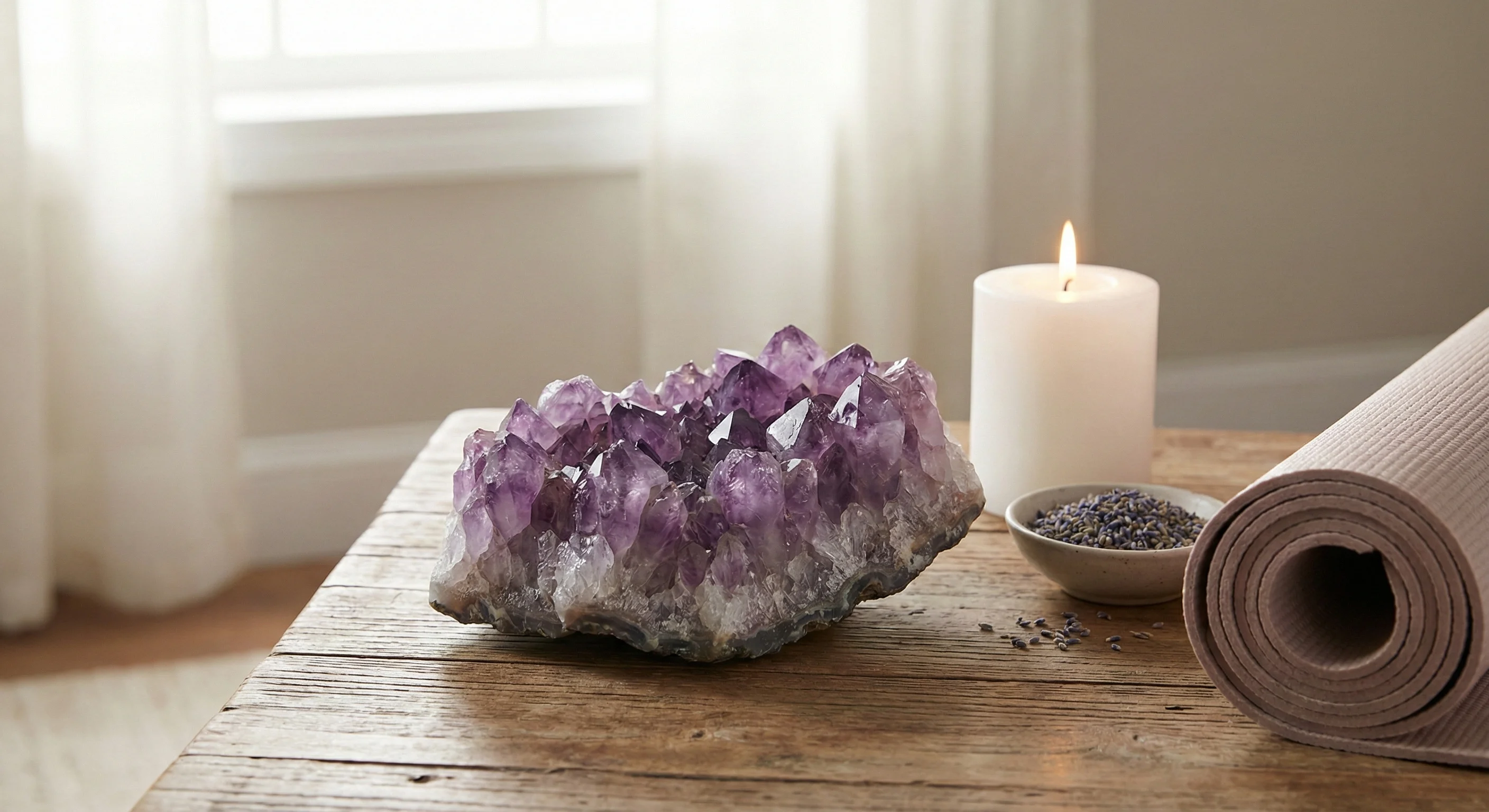
Canadian amethyst from the Lake Superior region is geologically stunning, characterized by dense, smoky cores and the iconic "Red Caps."
This is not a delicate terrestrial environment. Over a billion years ago, within the Sibley Group red beds, silica-rich fluids periodically violently mixed with heavy, iron-saturated brines moving through fault-controlled veins. As the crystal grew outward, the iron concentration spiked so dramatically at the termination that it precipitated as distinct flakes of hematite (Fe2O3) just below the surface.
Physical Interaction: Hover over the structural model to scan the severe elemental zonation gradient from core to tip.
Scanner Readout
The Reality Check: Cleaning Thunder Bay Material
I have ruined kilos of prime Canadian material learning how to process it, and it is a mistake almost every novice miner makes. The friction point lies in the very chemistry that makes these stones valuable. When you pull a cluster out of the freezing mud of a Thunder Bay vug, it does not look like a museum piece; it looks like a lump of red, dense concrete. The matrix is heavy, profoundly dense, and coats the crystal faces entirely.
The standard industry procedure for removing iron-stained mud is an oxalic acid bath. Here is the tragic flaw: the "red caps" that give Thunder Bay amethyst its identity are literally made of hematite—an iron oxide. If you mix your oxalic acid too hot, or if you lose track of time and leave the specimen submerged for an extra hour, the acid does exactly what it is chemically designed to do. It aggressively attacks iron.
You will pull the stone out of the vat expecting a pristine specimen, only to find you have completely dissolved the red cap inclusions just beneath the surface. You strip the crystal of its geological terroir, leaving behind a pitted, pale, and structurally weakened husk. Properly preparing this material demands an agonizingly slow, dilute chemical wash at ambient temperatures, constantly monitoring the reaction. The trade-off for retaining that beautiful hematite layer is days of meticulous, foul-smelling labor instead of a quick industrial acid boil.