
Amethyst View
home / amethyst value guide / Is 'Rose de France' Real Amethyst? The 2026 Aesthetic Shift Explained
2026 Pastel Aesthetic

Authenticating the 2026 Pastel Aesthetic: A Comprehensive Guide to Rose de France Amethyst

Attention collectors, bench jewelers, and gemstone professionals. You are likely encountering a surge of pale, lilac-toned quartz marketed under the "Rose de France" trade name.

If you are accustomed to the intense, deep violets of traditional Siberian amethyst, these delicate pinkish-purple stones might initially trigger skepticism. You may find yourself questioning if the material is merely low-grade glass or a clever imitation.

Macro shot of pale lilac Rose de France amethyst
Visualizing the delicate pinkish-purple hues of authentic Rose de France Amethyst.

Let’s clarify the market reality immediately: Rose de France is a legitimate variety of natural amethyst. It represents a significant 2026 pivot toward "quiet luxury" and minimalist palettes within the high-end gem sector.

However, this increased demand has unfortunately invited a wave of synthetic hydrothermal quartz and mislabeled pale glass into the supply chain. To protect your collection, you must implement a rigorous, step-by-step diagnostic protocol to verify and maintain this material.

Utilize this three-tier diagnostic funnel for immediate troubleshooting:

  • 1

    The Saturation Analysis: Natural quartz growth patterns are rarely perfectly linear. You must check for visible color zoning by viewing the stone through the pavilion facets under magnification.

  • 2

    The Scratch Resistance Metric: Amethyst maintains a hardness of 7 on the Mohs scale. If the specimen exhibits surface abrasions from common household dust (which contains silica), you are likely handling glass.

  • 3

    The Thermal Conductivity Test: Because of its crystalline structure, natural quartz feels notably colder to the touch than plastic or glass when initially pressed against the skin.

Diagnostic Metrics Visualization

Prepare your workspace. We are going to physically validate and secure your acquisition.

Core Prerequisites & Tools Required

Before handling the specimen, establish a controlled, neutral environment. Avoid evaluating gems under warm, incandescent, or dim residential lighting.

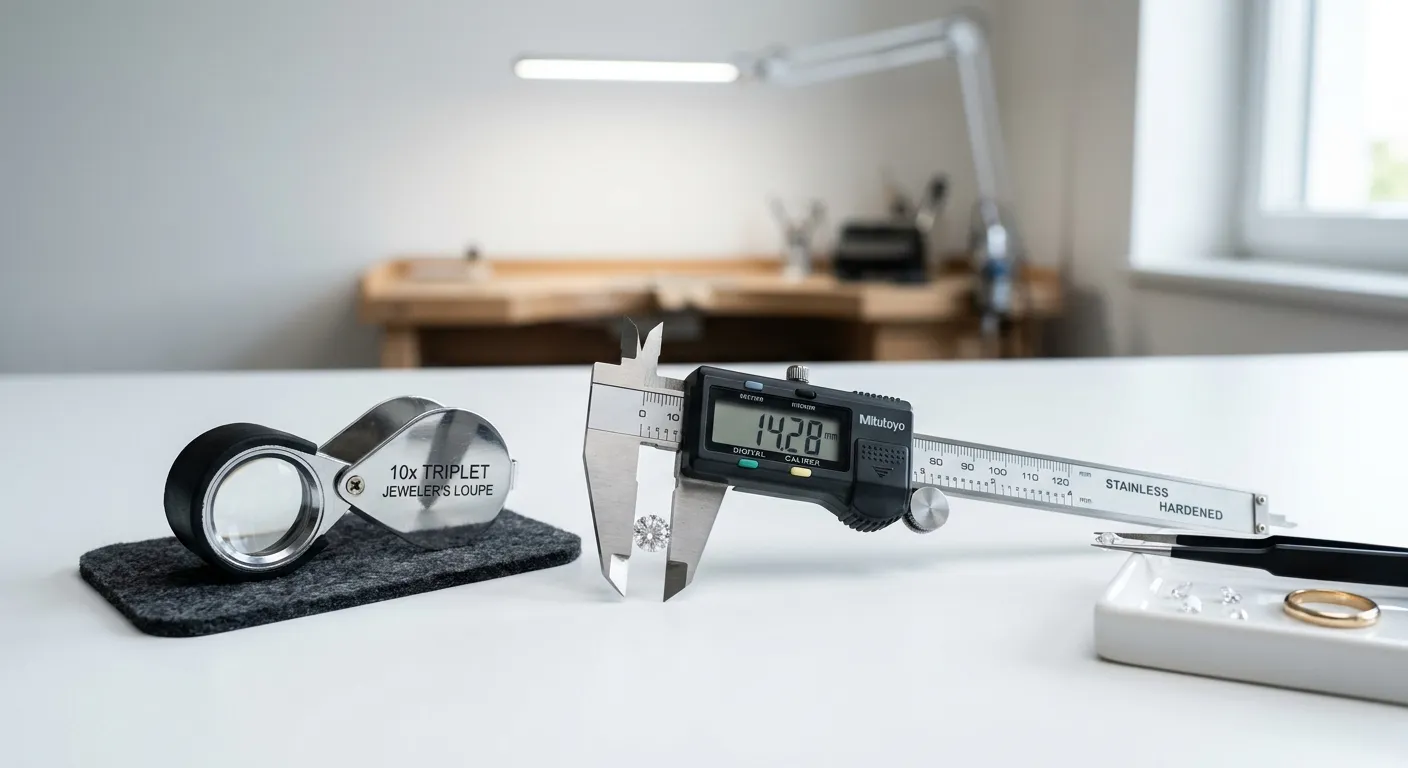
10x Triplet Jeweler's Loupe

Essential for identifying internal growth characteristics.

5000K Daylight LED Source

Necessary for assessing true color saturation without yellow bias.

Digital Calipers

Use these to capture precise millimeter dimensions for weight estimation.

Lint-Free Microfiber Cloth

Essential to remove oils and fingerprints before inspection.

Professional jeweler tools under 5000K light
A properly equipped workspace is the foundation of accurate gemological assessment.

Alternative Options:

  • Macro Lens Attachment: If a professional loupe is unavailable, use a high-quality macro lens on a smartphone to detect microscopic gas bubbles (indicative of glass).

  • Overcast Natural Light: If 5000K lighting is missing, perform the evaluation near a north-facing window on a cloudy day for diffused, color-accurate results.

Step-by-Step Execution Protocol

Follow these mechanical procedures in the exact order listed.

Step 1

Baseline Documentation and Zoning Inspection

Before any cleaning or physical testing, you must record the stone's initial condition. Photograph jewelry for identification using a macro setting to capture facet junctions and any pre-existing surface marks. Place the gem under the 5000K light and use your 10x loupe to probe the interior. Look for "tiger-stripe" inclusions or small mineral crystals. While high-quality Rose de France displays a relatively even lilac tone, most natural specimens will reveal subtle color bands when rotated.

Pro Tip: Note that the pale tone of this variety makes internal flaws more apparent than in darker amethyst. Avoid paying premium prices for stones with visible carbon spots or significant clouding.

If X happens, do Y: If the loupe reveals perfectly round bubbles or "swirl marks" resembling stirred syrup, STOP. This indicates manufactured glass. Terminate the transaction or request a refund immediately.

Step 2

Mechanical Cleaning and Surface Care

Accurate grading is impossible if the stone is obscured by grime. However, quartz is susceptible to thermal shock. Fill a plastic container with room-temperature water and a single drop of neutral detergent. Submerge the piece and use a soft-bristled brush to clear the pavilion. Rinse thoroughly. To finish, start using lintless tissue to pat the stone dry.
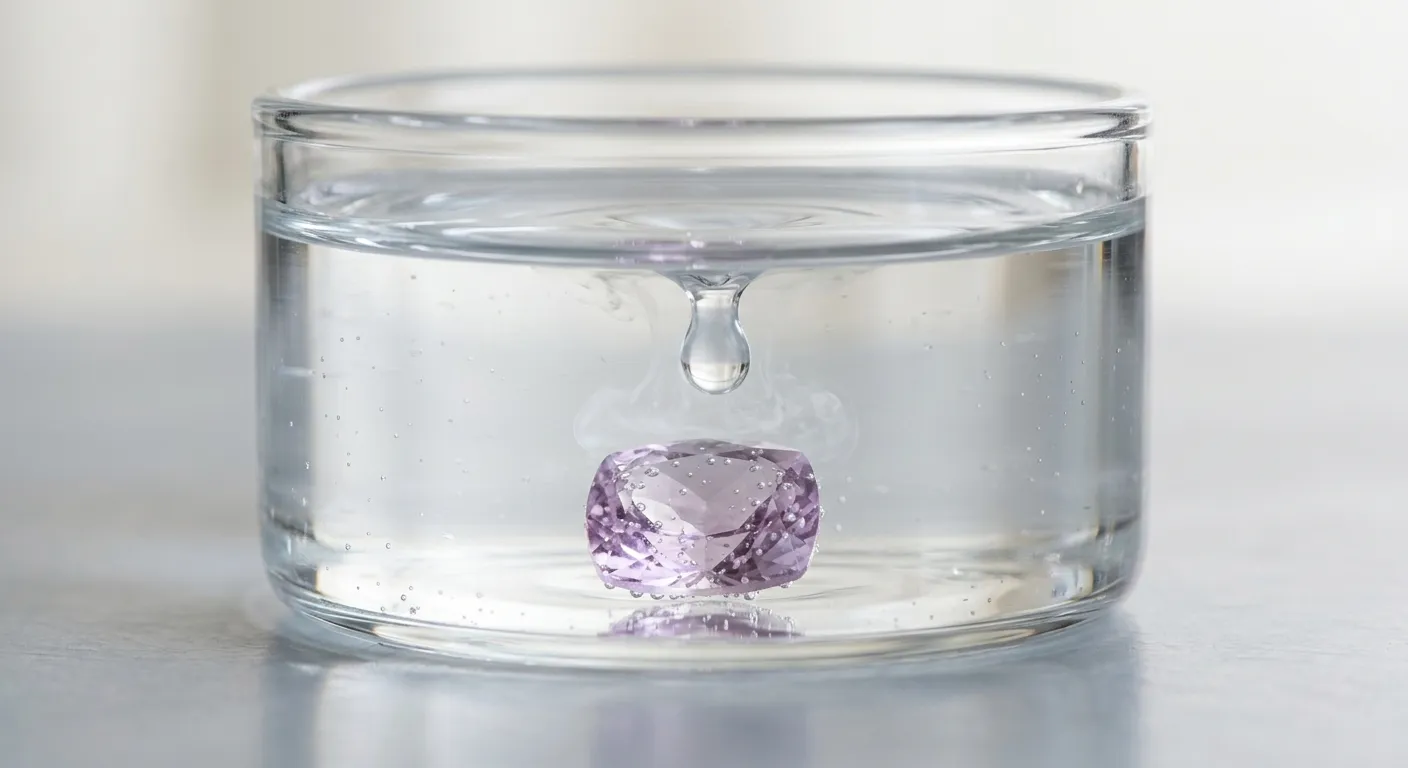
Cleaning a gemstone in a water bath
Gentle submersion in room-temperature water prevents thermal shock.

Pro Tip: You should regularly dust clean and polish the facets to maintain brilliance, but you must keep heat and chemicals out of the process. Corrosive cleaners can damage metal settings, and rapid temperature spikes may induce internal fractures.

If X happens, do Y: If you observe surface-reaching cracks or "feathers," don't immerse it in hot water. The heat can expand these fissures, potentially leading to a structural failure of the gem.

Step 3

Structural Integrity and Value Assessment

With a clean stone, inspect the facet edges. While quartz is durable, it is not indestructible. Use your loupe to check all specks for damage, paying close attention to "flea bites" or tiny chips along the girdle. When assessing the market value, remember that Rose de France is generally abundant in large sizes; therefore, the price per carat should scale linearly rather than exponentially.

Pro Tip: The value of a Rose de France pendant or ring is often found in the precision of the cut. Seek out custom "fantasy cuts" or concave facets that maximize light return in pale material.

If X happens, do Y: If a vendor quotes a price exceeding $50 per carat for a standard commercial-cut stone, negotiate firmly or seek another source. You are likely being quoted "collector" prices for standard material.

Step 4

Environmental Shielding and Traditional Maintenance

For those interested in the traditional or symbolic aspects of the stone, practitioners often suggest specific maintenance rituals. In various cultural contexts, this material is reported to be associated with a sense of tranquility and mental clarity. To perform a traditional "reset," run under cool water for 60 seconds or smudge with incense such as sage to maintain the aesthetic purity of the piece.
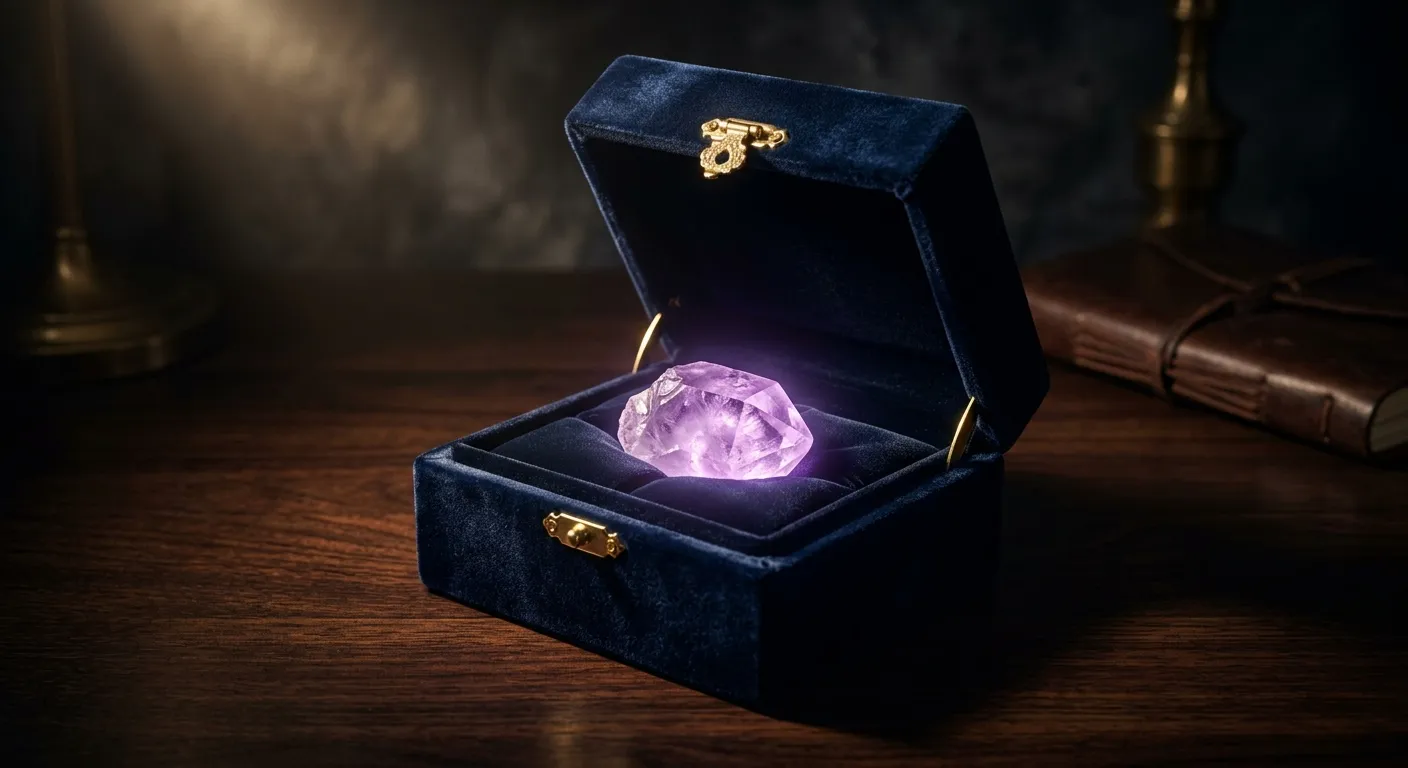
Gemstone protected from UV light in a dark box
Proper dark storage is critical to prevent UV-induced color fading.

Pro Tip: While some guides suggest you charge in sunlight or moonlight, you must keep them clear of sunlight. Prolonged UV exposure can cause the delicate lilac color to fade permanently. Moonlight is the only safe option for light-based rituals.

If X happens, do Y: If a bracelet is accidentally left in a high-UV environment and appears faded, move it to a light-proof jewelry box immediately. While you cannot fix UV-induced fading, you can prevent further color loss by strictly controlling light exposure.

Critical Mistakes to Avoid

1. The Ultrasonic Cleaning Error

The Mistake: Placing a Rose de France ring into a heated ultrasonic cleaner.

The Consequence: High-frequency vibrations and heat can cause microscopic liquid inclusions to expand, shattering the stone.

The Fix: Always use a soft cloth and manual washing techniques.

2. Improper Storage Friction

The Mistake: Storing quartz jewelry in direct contact with diamonds or sapphires.

The Consequence: Harder gems (Mohs 9-10) will easily scratch the surface of your amethyst (Mohs 7).

The Fix: Separate all pieces using individual velvet pouches or lined compartments.

3. The "Rarity" Marketing Trap

The Mistake: Accepting claims that the pale color is a "rare mutation" to justify extreme markups.

The Consequence: Significant financial overpayment for a gemstone that is actually widely available in the trade.

The Fix: Verify market rates through independent gemological pricing guides before purchase.

Hardcore Technical FAQ

Q: What defines the "Rose de France" color grade?

A: This is a trade term for amethyst that falls within a specific pastel range—typically a very light, pinkish-violet. The most desirable specimens maintain a "bright" appearance with no brown or gray secondary modifiers.

Q: Is it suitable for daily-wear engagement rings?

A: It requires caution. At Mohs 7, it can withstand occasional impact, but daily wear on the hand will eventually result in facet-edge abrasion. For longevity, a pendant is a more secure choice.

Q: Are these stones typically heat-treated?

A: Most Rose de France material is naturally pale and does not require heating to achieve its color. However, some darker material is occasionally heated to lighten it; this treatment is stable but must be disclosed.

Q: How can I distinguish natural from synthetic hydrothermal amethyst?

A: This is a complex task. Both have identical chemical and physical properties. The primary method involves microscopic analysis to find natural inclusions or specific "Brazil-law" twinning. If a stone is perfectly clean and uniform, a professional lab report is the only way to confirm natural origin.

Q: What is the significance of the 2026 aesthetic shift?

A: The industry has moved toward "calm presence" and "subtle elegance." Practitioners and designers now favor these lighter tones for their reported ability to complement a wider range of skin tones while offering a grounded, less aggressive visual profile compared to high-saturation gems.