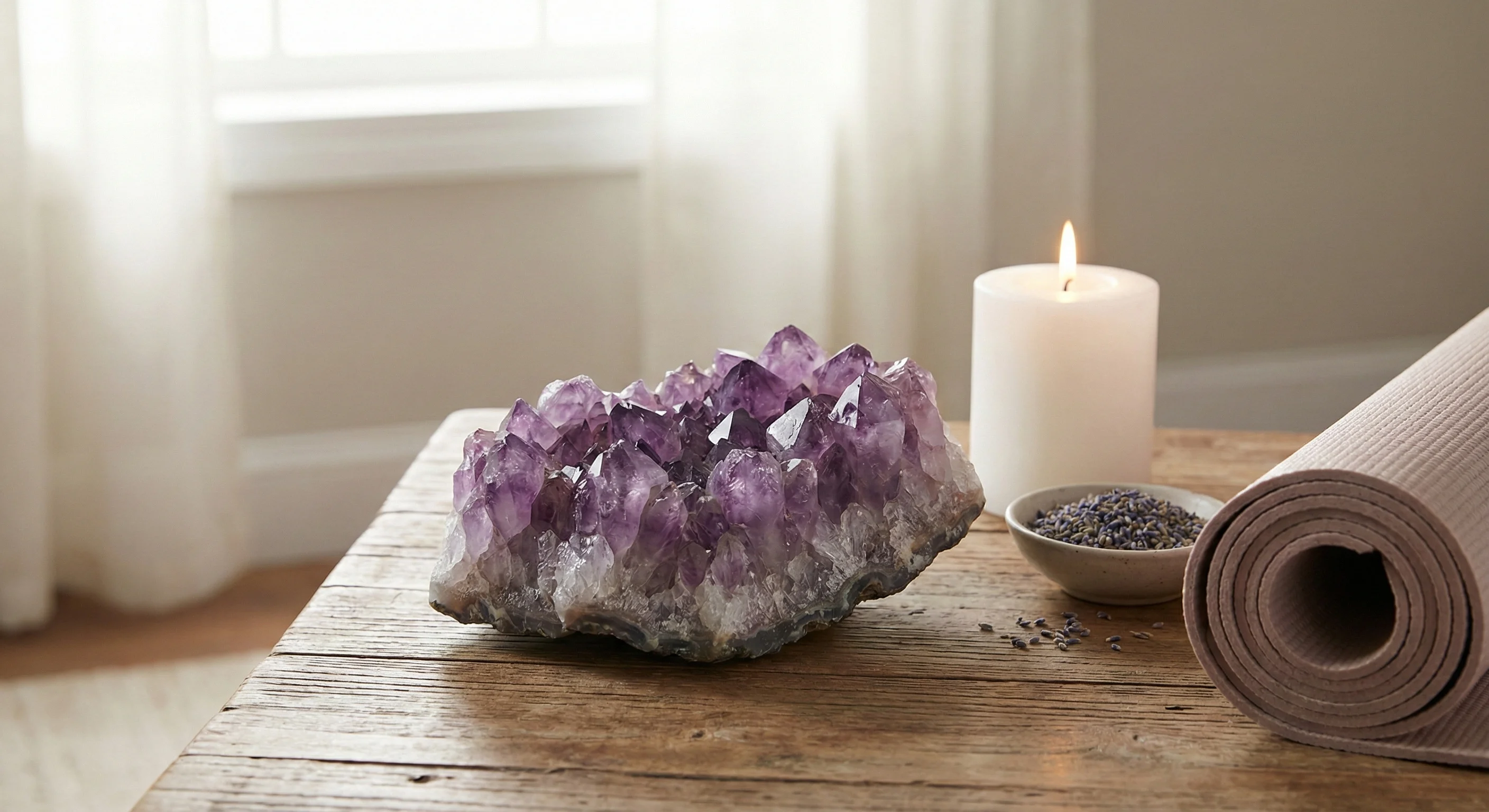
The spherical shape of basaltic geodes is a direct fossil record of degassing events during the cooling of massive lava flows. Imagine the Paraná Basin 130 million years ago: a flood of tholeiitic basalt lava covering South America. As this lava cooled, dissolved gases (CO2, water vapor) exsolved, forming bubbles.
In high-viscosity magma, these bubbles would be crushed. But in the fluid basalt flows of the Serra Geral formation, the bubbles were trapped as the rock hardened around them, creating vesicles. Millions of years later, groundwater saturated with silica permeated these porous basalt layers.
The silica precipitated layer by layer inside these spherical wombs. First came the celadonite (the green skin), then the agate (the chalcedony bands), and finally, as conditions stabilized, macro-crystalline quartz. If trace amounts of iron were present in the lattice—and if the rock sat there long enough to be irradiated by natural potassium-40 decay—you get Amethyst.